ARAD, Israel — After three weeks of relatively low Israeli casualties from the raging U.S.-Israeli war with Iran, the explosive impact from an Iranian ballistic missile delivered a grim wake-up call in Arad, a desert town in southern Israel.
“It was a very shocking boom, something that we haven’t heard before,” said David, 39, who gave only his first name. “It was a big miracle here, and thank God there was no killing of people.”
The strike on Saturday sheared the façade off several adjacent apartment blocks and shattered glass for blocks around. No one was killed, but Israel’s emergency services said more than 115 people were injured across the attack and another strike in the nearby town of Dimona.
The missiles startled an Israeli public that has endured comparatively few casualties in recent weeks thanks to the country’s formidable air defenses, frequently tested across many years by rockets from militant groups Hezbollah and Hamas.
Fourteen people have been killed in Israel since the war broke out, compared to at least 1,230 deaths in Iran, according to Red Crescent Society figures last updated on March 6. More than 1,000 people have been killed in Lebanon amid the renewed fighting between Israel and Hezbollah, according to government figures.
The latest attack, however, underscores the fallibility of Israel’s anti-air capabilities, as well as Iran’s continued ability to launch counterattacks despite weeks of strikes on its military sites.
The Israel Defense Forces said it would investigate what went wrong after the interception failures.
Dimona, where the second missile hit, is perilously close to Israel’s main nuclear reactor and research site. Iranian state media said the strike targeted the nuclear facility in retaliation for an attack on an Iranian nuclear enrichment site at Natanz, though the IDF has said it was unaware of that operation.
The International Atomic Energy Agency said that no abnormal off-site radiation levels had been observed following the strikes, though it urged all sides to exercise restraint near nuclear sites.
The IDF intercepted several other Iranian projectiles on Sunday, but the falling debris from at least seven interceptions caused as many as 15 injuries in Tel Aviv, officials said.
And in the northern Israeli town of Misgav Am, one man was killed when artillery fired by Hezbollah struck his car.
The abrupt uptick in casualties comes despite the Israeli military’s frequent contention that Iranian missile power has been largely neutralized, with each salvo containing progressively fewer missiles.
“Even the best defense in the world isn’t perfect,” said Lt. Col. Nadav Shoshani, the IDF’s international spokesperson, who visited the Arad impact site on Sunday.
“We’ve been able to diminish and degrade their capabilities significantly. Their firepower went down by 80% to 90%.”
Israeli forces have intercepted 92% of incoming Iranian projectiles, Shoshani said. But he credited the thinning missile salvos to the IDF, which he said was hunting down and destroying Iranian missile launchers.
“In the first days of this war, they fired [missiles in the] triple digits. We’ve since had days when they’ve fired single digits,” he said. “They thinned out. But one ballistic missile can have a tragic result.”
Several Israeli politicians visited the impact site in Arad on Sunday, including Prime Minister Benjamin Netanyahu, President Isaac Herzog and Israel’s main opposition leader Yair Lapid. Israeli leaders touted the impact on a residential apartment block as proof that the Iranians are deliberately targeting civilians, despite Iran’s statement that the strikes were aimed at the Dimona nuclear facility.
“Look around you. Do you see any military sites or facilities around? What they’re doing is trying to kill as many civilians as possible,” said Lapid. “It only goes to prove that this is a just war against an enemy who is basically a terror regime who is doing its best to just spread chaos.”
But for David, who said he only survived the missile strike because Israel’s early warning system sent him to his local bomb shelter, the war in Iran is worth it even when it literally hits close to home.
“We know the situation. Unfortunately we got hit, but there is a war and in this war we are going to win,” he said. “Of course it’s not nice, we’re afraid. But the job needs to be done.”
3 hours ago
Iranian missile strikes injure 115 in Israel, officials say, puncturing air defenses and shocking the public
Read original articleImpacted Markets
5 markets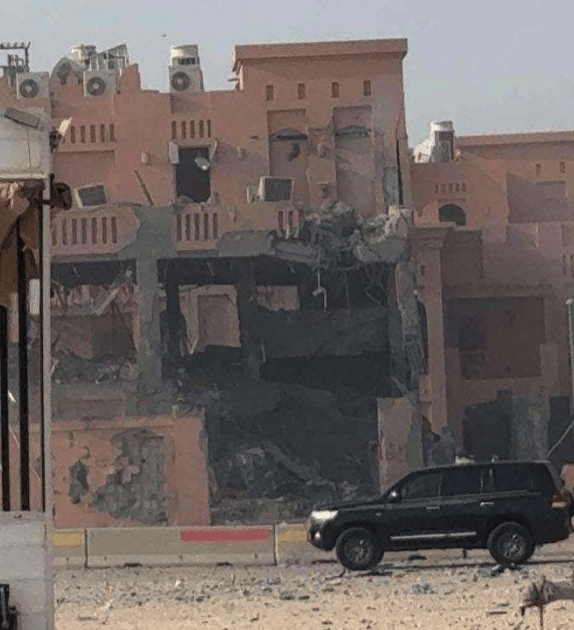
Will Israel strike 11 countries in 2026?
Polymarket
Vol: $69.9kLiq: $9.3k
Impact
3/10
Volatility
high
Macro
low
Risk
high
Will Israel strike 1 country in 2026?
Polymarket
Vol: $87.3k
Impact
6/10
Volatility
high
Macro
high
Risk
high
Will Israel strike 12 countries in 2026?
Polymarket
Vol: $52.1kLiq: $10.3k
Impact
3/10
Volatility
high
Macro
low
Risk
high
Will Israel strike 15 or more countries in 2026?
Polymarket
Vol: $26.7kLiq: $11.0k
Impact
2/10
Volatility
high
Macro
high
Risk
high
Will Israel strike 2 countries in 2026?
Polymarket
Impact
5/10
Volatility
high
Macro
medium
Risk
high