Video Ad Feedback
Israel's Dimona reels from Iranian missile strike
01:21 • Source: CNN
Israel's Dimona reels from Iranian missile strike
01:21
These are the latest images we’re seeing from the cities of Arad and Dimona in southern Israel after they were hit by Iranian missiles on Saturday.
Dozens of people were wounded and Israel’s emergency response service declared a mass casualty event after a strike on Arad, which injured at least 74 people, seven seriously, in two different places.
A one-story building in Dimona was severely damaged and several people were wounded in a separate Iranian ballistic missile attack, according to the city’s Fire and Rescue Services.
Iran says it will strike US infrastructure in the Middle East if its power plants are hit after President Donald Trump threatened to “hit and obliterate” the country’s facilities if it does not reopen the Strait of Hormuz.
The vital waterway remains open to all shipping except vessels linked to “Iran’s enemies,” Tehran’s representative to the UN maritime agency said.
If you’re just joining us, here’s the very latest:
Six killed in helicopter crash: Six people on board a helicopter in Qatar were killed when it crashed this morning, according to the country’s Interior Ministry.
Iran vows retaliation: Tehran will strike US infrastructure in the region if Trump follows through on his threat, Iran’s Mehr news agency reported, citing a military spokesperson.
Strait of Hormuz: The shipping route remains open to all except Iran’s “enemies,” Tehran’s representative to the UN maritime agency said after Trump’s threat, according to state media.
Japan considers minesweeping: Meanwhile, Japan would consider deploying its military for minesweeping in the strait, if a ceasefire were reached, its foreign minister said.
Strikes on Israel: Police officers and bomb disposal experts were handling “impact sites of munitions” in central Israel. In the north, a man was killed after a direct strike on a vehicle. The attacks followed Iranian strikes on the cities of Arad and Dimona on Saturday, which wounded dozens after the missiles appeared to have pierced Israel’s defense array.
Embassy staff told to leave: Saudi Arabia’s foreign ministry says Iran’s military attaché, the assistant military attaché and three embassy staff have been ordered to leave the country. Tehran has continued to strike its Gulf neighbors.
EU energy warning: The European Commission has urged member states to lower gas storage targets as the war impacts critical supplies and drives up energy prices.
Six people on board a helicopter in Qatar were killed when it crashed Sunday morning, according to the country’s Interior Ministry.
A seventh person has not yet been found, the ministry said, and the search was continuing.
Among those on board were three Turkish nationals, including one Turkish Armed Forces personnel and two personnel from Turkish defense firm Aselsan, according to Turkey’s foreign ministry.
Earlier, the Qatari Defense Ministry said the helicopter had crashed in regional waters due to a “technical malfunction” while on routine duty.
This post has been updated with additional developments.
The Strait of Hormuz remains open to all except Iran’s “enemies,” the country’s representative to the UN maritime agency said in remarks published on Sunday shortly after US President Donald Trump gave Tehran 48 hours to open the waterway.
Iran has effectively blocked the narrow strait where ships carrying 20% of the world’s oil supply normally pass through, triggering a spike in fuel prices.
“The Strait of Hormuz is open to everyone except ‘enemies’,” Ali Mousavi, Iran’s representative to the International Maritime Organization (IMO) said, according to the semi-official Mehr news agency, adding that the “safety of ships and their crews requires coordination with Iranian authorities
Mousavi said Tehran is ready to coordinate with IMO and other countries to improve maritime safety and protect seafarers.
Mousavi said diplomacy remains Iran’s priority, but “a complete cessation of aggression and mutual trust and assurance are more essential.”
A man trapped in a vehicle was found dead after a direct missile hit on an Israeli community on the border with Lebanon.
Fierce flames engulfed two vehicles blocking a road in the northern kibbutz of Misgav Am, seen in footage released Sunday by Israel’s emergency services.
“We arrived at the scene and saw two vehicles on fire,” an emergency responder from Magen David Adom said, adding that the man was found in the driver’s seat with “no signs of life.”
Separately on Sunday, the Israeli military reported “a launch from Lebanon toward a community along the northern border.” CNN has not confirmed if the incidents are related.
Japan could consider deploying its military for minesweeping in the Strait of Hormuz if a ceasefire is reached in the war, its foreign minister said.
“This is purely hypothetical, but if a ceasefire is in place and mines are causing problems, I suppose that’s something we’d have to consider at that point,” Toshimitsu Motegi told a Fuji TV program Sunday.
Japan imports more than 90% of its crude oil from the Middle East, a reliance that deepened after it sharply reduced imports of Russian energy following Moscow’s full-scale invasion of Ukraine in 2022.
Fuel prices have already climbed to multi-year highs, with average prices hitting 190.9 yen ($1.20) per liter this week, and broader inflationary pressure expected to follow.
While Japan has maintained strategic oil reserves equivalent to more than 254 days of consumption, Tokyo has already begun tapping those reserves to stabilize supply, prices, and public sentiment.
Hanako Montgomery contributed to this report.
Tehran will retaliate against the US by striking its infrastructure in the region if US President Donald Trump follows through on his threat to attack its power plants, Iran’s semi-official Mehr news agency reported, citing a military spokesperson.
“If Iran’s fuel and energy infrastructure is attacked by the enemy, all energy, information technology, and desalination infrastructure belonging to the United States and the regime in the region will be targeted,” a spokesperson for Iran’s Khatam al-Anbiya Central Headquarters said, Mehr reported on Sunday.
Hours earlier, Trump threatened to “hit and obliterate” Iranian power plants if Tehran does not reopen the Strait of Hormuz within 48 hours.
Trump posted his warning on Truth Social at 7:44 p.m. ET on Saturday, which means his deadline expires at 7:44 p.m. ET on Monday (3:14 a.m. on Tuesday in Tehran).
Police officers and bomb disposal experts are working to secure and isolate “impact sites of munitions” in central Israel, police said Sunday.
“The Israel Police received reports a short while ago regarding the fall of munitions within the Tel Aviv District,” they said.
“At this stage, there are no casualties,” they added.
It came just hours after Iranian strikes on the cities of Arad and Dimona, wounding dozens, after the missiles appeared to have pierced Israel’s defense array.
Iran’s national broadcaster had said the attack on Dimona was in response to what Tehran called a US-Israeli strike on the Natanz nuclear facility.
The Israeli military said it was “not familiar” with a strike on Natanz. The US carried out a strike on Natanz during the 12-day war in June.
Shirley Modlin was in meetings all day Thursday searching for costs to cut. Her small manufacturing facility in Powhatan, Virginia, relies on carbide tools made of tungsten to make precise cuts.
The chemical element is used in armor-piercing artillery. So carbide tool prices have more than doubled in the past two weeks, Modlin says.
Modlin, owner of 3D Design and Manufacturing, said customers won’t tolerate increased prices to cover the rising tool costs.
Modlin offers her staff competitive benefits and raises every year to retain and attract new workers. But last year, tariffs rocked the US manufacturing industry, sending the costs of imported raw materials surging – Modlin’s aluminum and steel costs jumped 65%.
She wasn’t able to give any raises last year. And on Thursday, facing another round of surging costs, Modlin had to cut an administrator back from full-time to part-time without benefits.
“He’s got a house payment; he’s got bills he’s gotta pay. It’s just awful,” Modlin said. “We have to do something. You can only cut so many breakroom supplies.”
Modlin was one of four business owners — a clothing store owner, a bread baker, a spot shipper and a factory owner — CNN spoke to about how they plan to deal with surging fuel costs.
Read about their plans here.
Saudi Arabia has ordered Iran’s military attaché, the assistant military attaché and three embassy staff to leave the country within 24 hours, its foreign ministry said early Sunday, as Tehran continued strikes on its Gulf neighbors.
The Saudi foreign ministry said Iran’s ongoing attacks amounted to “flagrant violation” of international conventions and contradicted “the principles of Islamic brotherhood.” It also warned against further escalation.
“The Kingdom of Saudi Arabia has notified the military attaché of the Embassy of the Islamic Republic of Iran to the Kingdom, the assistant military attaché, and three members of the mission staff to leave the Kingdom,” it said, adding that it has declared them “personae non gratae,” which means they are no longer welcome by the host country.
Hours after the announcement, the Saudi defense ministry said it detected three ballistic missiles fired at the capital of Riyadh.
Here’s the latest from the Gulf:
Saudi Arabia: The defense ministry said early Sunday that it intercepted one of the three missiles fired towards Riyadh, while the remaining two fell in an uninhabited area. The military also detected several drones launched towards the eastern region overnight.
UAE: The defense ministry responded to strikes from Iran early Sunday, it said. Over the past day, its air defenses also intercepted at least eight unmanned aerial vehicles (UAVs) and three ballistic missiles.
Kuwait: Its air defense systems struck down nine ballistic missiles in a 24-hour period, its state-owned news agency reported Saturday night, citing the defense ministry.
Bahrain: The defense force said early Sunday that it shot down two drones within the past day.
The European Commission has urged member states to lower gas storage targets, as the Iran war impacts critical suppliers and drives up energy prices.
EU Energy Commissioner Dan Jørgensen reminded the bloc’s energy ministers of the “flexibilities” available under current gas storage regulations and encouraged them to make use of them, a spokesperson told CNN.
The move signals concern in Brussels that rigid storage targets could add to the upward pressure on European energy prices.
In a letter on Friday, Jørgensen highlighted that member states can reduce storage targets by up to 20 percentage points – 10 in “difficult conditions to fill underground gas storages,” a further five under “certain technical conditions” and an additional five in cases of “persistent unfavourable market conditions.”
Benchmark natural gas prices surged just over 13% on Thursday, having soared by 25% at one point, and have now nearly doubled since the war began on February 28.
On Friday morning local time, Iran launched two intermediate-range ballistic missiles at Diego Garcia, a joint US-UK military base in the Indian Ocean, a US official told CNN, adding that neither of them struck the base.
This marks what appears to be the first known attempt to target the base, which was deliberately built in a remote location beyond the reach of many adversaries. The base is over 2,000 miles (over 3,000 kilometers) off Iran’s coast.
While the attack was unsuccessful, it shows that Iran may not be adhering its self-imposed missile range limit of 2,000 kilometers, raising concerns about whether Tehran could hit US and European interests further away than previously thought.
Trita Parsi, the co-founder of the Quincy Institute for Responsible Statecraft, believes the US homeland is safe from Iranian strikes, but he told CNN that the attempted attack “suggests that other bases that the US thought is outside of the range of Iran may actually be within the range,” along with American ships “that have been kept 3,000 kilometers away.”
President Donald Trump has repeatedly claimed that Tehran has been building missiles that “could soon reach the American homeland.”
However, an unclassified assessment from the Defense Intelligence Agency from 2025 said that Iran could develop a “militarily-viable” intercontinental ballistic missile by 2035 “should Tehran decide to pursue the capability.”
Sources also told CNN late last month that there was no intelligence to suggest that Iran is pursuing an intercontinental ballistic missile program to hit the US at this time.
Read more about Tehran’s military capabilities here.
US President Donald Trump has threatened to “hit and obliterate” Iran’s power plants , “STARTING WITH THE BIGGEST ONE FIRST!” if it does not open the Strait of Hormuz within 48 hours. Here’s a look at the facilities in the country:
Iran has about 110 gas plants, a small number of which are hybrid, according to data from OpenInfraMap, an open-source intelligence tool for researching energy infrastructure, compiled by volunteers.
The country also operates solar, hydro, wind, oil, diesel, coal, geothermal and nuclear plants, according to the site.
The three biggest plants by output run on gas:
Damavand Combined Cycle Power Plant: located around 70 km southeast from downtown Tehran. Output: 2,868MW.
Shahid Salimi: located in Mazandaran province, near the Caspian Sea. Output: 2,215 MW.
Shahid Rajai: located some 110 km northeast of downtown Tehran. Output: 2,043 MW.
For context: Florida’s West County Energy Center is the largest operating natural gas power plant in the US, with an output of 3,750 MW, according to OpenInfraMap.
Iran produces most of its electricity via fossil fuels. Over 340,000 GWh came from such fuels, w hile almost 28,000 GWh was from renewable energy in 2023, according to data from the International Atomic Energy Agency (IAEA) website.
Iran says it only has one nuclear power reactor in operation — the Bushehr Nuclear Power Plant in the west — and another under construction, according to the IAEA. In 2023, Iran produced 5,740 GWh of electricity by nuclear energy.
Iran’s Atomic Energy Organization said a “hostile projectile” struck the Bushehr site on Tuesday, but reported no casualties and no damage to the facility.
CNN’s Teele Rebane contributed to this report.
President Donald Trump threatened Saturday to “hit and obliterate” Iranian power plants if Tehran does not reopen the Strait of Hormuz within 48 hours.
Trump posted at 7:44 p.m. ET on Saturday, which means his deadline expires at 7:44 p.m. ET on Monday (3:14 a.m. on Tuesday in Tehran).
The threat marks an escalation in rhetoric from Trump, who’s previously dangled the option of hitting Iranian infrastructure but cautioned it would impair the country’s ability to rebuild. And it’s a tacit acknowledgement that the strait’s closure provides Iran significant leverage.
Trump’s latest threat comes a day after he said the US is considering “winding down” military efforts in the Middle East and dismissed questions about the White House’s plan for restoring traffic through the Strait of Hormuz, saying that “at a certain point, it’ll open itself.”
It also comes after Trump said Thursday that he’d told Israeli Prime Minister Benjamin Netanyahu to stop attacks on Iranian oil and gas facilities.
But as gas prices have risen at home, US officials have been furiously trying to avert a potential monthslong closure of the strait, privately acknowledging that reopening the key waterway is a problem without a clear solution, CNN previously reported.
4 hours ago
Live updates: Iran war news; Trump threatens to ‘obliterate’ Iran’s power plants
Read original articleImpacted Markets
5 markets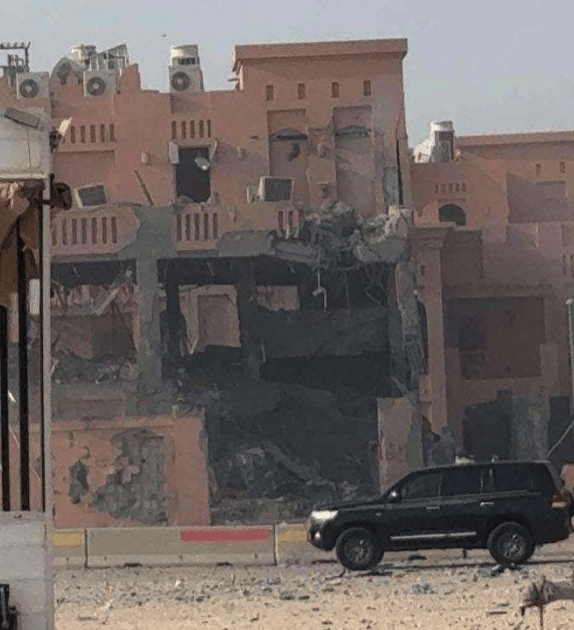
Will Israel strike 2 countries in 2026?
Polymarket
Impact
6/10
Volatility
high
Macro
high
Risk
high
Will Israel strike 13 countries in 2026?
Polymarket
Vol: $43.9kLiq: $11.5k
Impact
2/10
Volatility
high
Macro
high
Risk
high
Will Israel strike 12 countries in 2026?
Polymarket
Liq: $9.5k
Impact
3/10
Volatility
high
Macro
high
Risk
high
Will Israel strike 11 countries in 2026?
Polymarket
Vol: $56.2kLiq: $9.9k
Impact
3/10
Volatility
high
Macro
high
Risk
high
Will Israel strike 15 or more countries in 2026?
Polymarket
Liq: $10.3k
Impact
3/10
Volatility
high
Macro
medium
Risk
high