DUBAI, United Arab Emirates (AP) — Iran’s Natanz nuclear enrichment facility was hit in an airstrike Saturday, an official Iranian news agency reported, saying there was no radiation leakage, as Israeli defense minister warned of an upcoming surge in attacks on Iran as the war in the Middle East entered its fourth week.
Israel Katz, the defense minister, said in a video statement that next week, “the intensity of the attacks” by Israel and the United States against Iran’s ruling theocracy will “increase significantly.”
He spoke shortly after fragments from an Iranian missile slammed into an empty kindergarten near Tel Aviv. Israeli army spokesman Nadav Shoshani posted a video on X of the kindergarten building; no casualties were reported as the place was empty at the time.
Overnight and into the morning, Tehran, Iran’s capital, saw heavy airstrikes, residents said. In Iraq, a drone struck the intelligence service headquarters in Baghdad, killing an officer. No group immediately claimed responsibility for that attack.
U.S. President Donald Trump said on Friday he was considering “winding down” military operations in the Mideast even as the United States was sending three more amphibious assault ships and roughly 2,500 additional Marines to the region.
Trump’s post on social media followed an Iranian threat to attack recreational and tourist sites worldwide.
The mixed messages from the U.S. came after another climb in oil prices plunged the U.S. stock market, and was followed by a Trump administration announcement it was lifting sanctions on Iranian oil already loaded on ships, a move aimed at wrangling soaring fuel prices.
Iran strikes a joint US-UK base in the Indian Ocean
Britain meanwhile condemned “Iran’s reckless attacks” after its military fired missiles at the U.K.-U.S. air base on the island of Diego Garcia in the Indian Ocean on Friday.
U.K. officials have not given details of the attempted strike, which was unsuccessful. It’s unclear how close the missiles came to the base, which is about 2,500 miles (4,000 kilometers) from Iran.
The Ministry of Defense said Saturday that Iran’s “lashing out across the region and holding hostage the Strait of Hormuz, are a threat to British interests and British allies.”
Britain has not participated in U.S.-Israeli attacks on Iran, but has allowed American bombers to use U.K. bases to attack Iran’s missile sites.
On Friday, the British government said U.S. bombers can also use U.K. bases, including Diego Garcia, in operations to prevent Iran attacking ships in the Strait of Hormuz. Iran targeted the base before that U.K. statement.
Attack on Iran’s Natanz nuclear site
Iran’s official news agency Mizan said there was no leakage after Saturday’s strike on the Natanz nuclear facility, nearly 220 kilometers (135 miles) southeast of Tehran.
The facility, Iran’s main uranium enrichment site, was hit in the first week of the war and several buildings appeared damaged, according to satellite images. The U.N. nuclear watchdog — the International Atomic Energy Agency — had said “no radiological consequence” were expected from that earlier strike. Natanz had also been targeted in the 12-day war last June.
On Saturday, the IAEA said on X it was informed by Iran about the Natanz strike and about there being no increase in off-site radiation levels. The agency said it was looking into the incident.
Trump says US near completion of its goals
The U.S. and Israel have offered shifting rationales for the war, from hoping to foment an uprising that topples Iran’s leadership to eliminating its nuclear and missile programs. There have been no public signs of any such uprising and no end to the war in sight.
On social media, Trump said, “We are getting very close to meeting our objectives as we consider winding down our great Military efforts in the Middle East.”
That seemed at odds with his administration’s move to bolster its firepower in the region and request another $200 billion from Congress to fund the war.
The U.S. is deploying three more amphibious assault ships and roughly 2,500 additional Marines to the Mideast, an official told The Associated Press. Two other U.S. officials confirmed that ships were deploying, without saying where they were headed. All three spoke on condition of anonymity to discuss the military operations.
Days earlier, the U.S. redirected another group of amphibious assault ships carrying another 2,500 Marines from the Pacific to the Middle East. The Marines will join more than 50,000 U.S. troops already in the region.
Trump has said he has no plans to send ground forces into Iran but also has asserted that he retains all options.
Iran threatens attacks beyond the Middle East
Iran’s top military spokesperson, Gen. Abolfazl Shekarchi, warned Friday that “parks, recreational areas and tourist destinations” worldwide will not be safe for the country’s enemies. The threat renewed concerns that Tehran may revert to using militant attacks beyond the Middle East as a pressure tactic.
Supreme Leader Ayatollah Mojtaba Khamenei praised Iranians’ steadfastness in the face of war in a written statement read on Iranian television to mark Nowruz. Khamenei has not been seen in public since he became supreme leader following Israeli strikes that killed his father, Ayatollah Ali Khamenei, and reportedly wounded him.
With little information coming out of Iran, it was not clear how much damage its arms, nuclear or energy facilities have sustained in the punishing U.S. and Israeli strikes, which began Feb. 28 — or even who was truly in charge of the country. But Iran’s attacks are still choking off oil supplies and raising food and fuel prices far beyond the Middle East.
Israel continues wave of strikes against Hezbollah militants
The Israeli military said early Saturday that it began a wave of strikes targeting Iran-backed Hezbollah militants in Beirut’s southern suburbs.
Smoke was seen rising, fires broke out and loud explosions were heard across parts of central Beirut, hours after the Israeli army renewed evacuation warnings for seven neighborhoods.
Israeli strikes targeting Hezbollah in Lebanon have killed more than 1,000 people and displaced more than 1 million, according to the Lebanese government.
More than 1,300 people have been killed in Iran during the war. In Israel, 15 people have been killed by Iranian missiles and four others have died in the occupied West Bank. At least 13 U.S. military members have been killed.
US pauses sanctions on Iranian oil
Brent crude oil, the international standard, has soared during the fighting and was around $106 per barrel, up from roughly $70 before the war.
The newly announced U.S. pause in sanctions applies to Iranian oil loaded on ships as of Friday and is set to end April 19.
The new move does not increase the flow of production, a central factor in the surging prices. Iran has managed to evade U.S. sanctions for years, suggesting that much of what it exports already reaches buyers.
Looking for ways to boost global oil supplies during the Iran war, the Trump administration has previously paused sanctions on certain Russian oil shipments for 30 days, which critics said rewarded Moscow while having only a modest effect on markets.
___
Magdy reported from Cairo, Egypt and Mednick from Tel Aviv, Israel.
5 hours ago
Iran says a strike hit a key nuclear facility as Mideast war enters week 4 and US sends more troops
Read original articleImpacted Markets
5 markets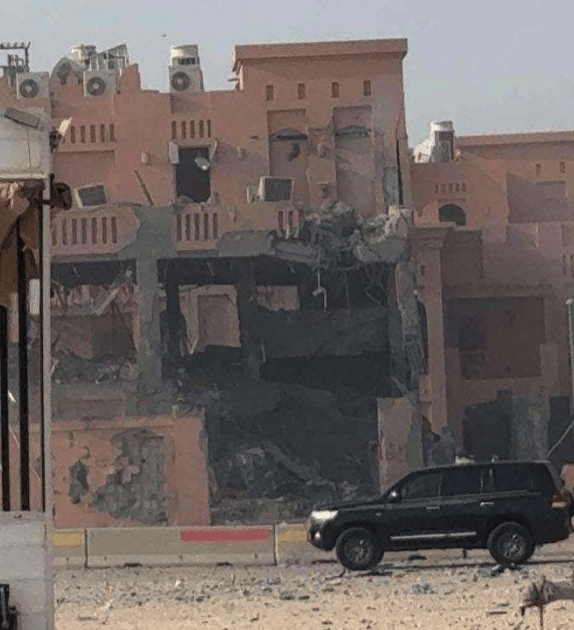
Will Israel strike 2 countries in 2026?
Polymarket
Impact
7/10
Volatility
high
Macro
high
Risk
high
Will Israel strike 12 countries in 2026?
Polymarket
Vol: $52.1kLiq: $11.3k
Impact
2/10
Volatility
high
Macro
high
Risk
high
Will Israel strike 15 or more countries in 2026?
Polymarket
Vol: $26.7kLiq: $11.9k
Impact
2/10
Volatility
medium
Macro
high
Risk
medium
Will Israel strike 1 country in 2026?
Polymarket
Vol: $87.3k
Impact
9/10
Volatility
high
Macro
high
Risk
high
Will Israel strike 11 countries in 2026?
Polymarket
Vol: $56.2kLiq: $10.7k
Impact
2/10
Volatility
high
Macro
high
Risk
high