Geoff Bennett:
Welcome to the "News Hour."
Israel pounded Tehran and Beirut today, as Iran sent waves of missiles and drones throughout the Mideast, targeting Israel and Gulf nations. President Trump again touted efforts toward a diplomatic solution, even as the U.S. continues its attacks.
We start in Israel, where our Nick Schifrin is again tonight.
Nick Schifrin:
In Central Tel Aviv this morning, the ripped-up, blown-apart aftermath of an Iranian attack. Israeli authorities say an Iranian missile or missile fragment with more than 200 pounds of explosives hit this apartment block, walls now windows in what used to be homes.
Remarkably, nobody was seriously injured. All local residents were saved by sirens and a local bomb shelter.
Peleg Ben Barak, Tel Aviv, Israel, Resident:
When the last guy just closed the door, there was a massive explosion outside. And we knew it was right here.
Nick Schifrin:
Peleg Ben Barak is a 27-year-old Australian Israeli. This is what's left of his apartment, including the missile fragment. And this is now his view. In previous conflicts, he evacuated. Not this time.
And now will you stay?
Peleg Ben Barak:
In Tel Aviv? Yes. Yes, no doubt. I mean, we're going to be evacuated to a hotel today, hopefully, but we will stay in Tel Aviv.
Nick Schifrin:
That resilience shared by 37-year-old Ori Mannis and his three boys, including 9-year-old Shahar.
Shahar Mannis, Tel Aviv, Israel, Resident (through interpreter):
We heard a very loud boom, and it scared us.
Nick Schifrin:
Scary, but now a way of life. On average, Iran has fired 10 missiles across Israel every day.
Ori Mannis, Tel Aviv, Israel, Resident:
Everywhere, it's a place that a bomb could hit. So, I don't know., it's where we live.
Nick Schifrin:
And Iran today also targeted Arab Gulf countries.
(Sirens blaring)
Nick Schifrin:
Sirens blared in Kuwait, which today woke up to power outages after shrapnel hit power lines. Despite all these repeated Iranian attacks, President Trump claimed today Iran had turned over a new leaf.
President Donald Trump:
We have really regime change. This is a change in the regime, because the leaders are all very different than the ones that we started off with that created all those problems. The other side, I can tell you, they'd like to make a deal. And who wouldn't if you were there? Look...
Nick Schifrin:
Today, the U.S. continued to strike Iranian missiles and drones, and Israel continued its attacks on Iran's infrastructure.
That's left no refuge for people trapped in a war they didn't choose. Today, a child pulled out from the ruins of his family home. Across the city, residential buildings are reduced to rubble. The Iranian Red Crescent said more than 82,000 civilian units have been damaged or destroyed so far.
Today, Israel also intensified its campaign in Lebanon targeting Hezbollah infrastructure. It hit this mosque in Al-Khiyam in Southern Lebanon. And multiple explosions rocked Tyre in the south. Israel is isolating the south, destroying more bridges.
The campaign has displaced more than a million people. And now Israeli Defense Minister Israel Katz warned, the Israeli army would occupy Southern Lebanon until a political agreement.
Israel Katz, Israeli Defense Minister (through interpreter):
The IDF is maneuvering into Lebanese territory to seize a front line of defense.
Nick Schifrin:
Into those Israeli communities, since Hezbollah entered the war, Israel says Hezbollah has fired at least 850 drones and missiles, including this strike during our recent visit into a civilian neighborhood in Northern Israel's largest city.
A handful of civilians have died, including Ofer Moskowitz, his funeral this week limited in size and held miles from his border hometown because it's too dangerous. Moskowitz was an avocado farmer and the well-known spokesman of the Kibbutz Misgav Am.
Eyal Moskowitz is Ofer's brother.
How do you remember your brother?
Eyal Moskowitz, Brother of Ofer Moskowitz: It's hard for me to speak now how I remember him, because he's still alive. I can't talk to him -- talk about him on past tense.
Nick Schifrin:
But Moskowitz was not killed by Hezbollah. He was killed accidentally by Israeli artillery fire. Eyal does not blame the army.
Eyal Moskowitz:
It doesn't affect. Mistake happens. He died, and he died. We can't change it.
Nick Schifrin:
That acceptance is not universal.
Hanan Rubinski is an old friend of Moskowitz and fellow resident of Misgav Am.
Hanan Rubinski, Friend of Ofer Moskowitz: It was five shells that fell into the kibbutz, not one after another, one, five minutes, another one. Somebody's head has to be chopped.
Nick Schifrin:
His anger is felt in these communities that last year were promised the previous war in Lebanon had eradicated the Hezbollah threat. It has not.
Hanan Rubinski:
You can't fool us every time, but this time we were fooled. We believed that they will be quiet. We believed that after a year-and-a-half of this so powerful war, we will have 10 years of quiet, and we had only -- not even a year.
Nick Schifrin:
Israel's strategy is now not to evacuate the citizens of this area, but instead try and push the defensive lines deeper into Lebanon. And you see that village behind me, about half-a-mile, a Lebanese village where Hezbollah used to be based, now destroyed by Israeli forces.
Thunderous outgoing Israeli attacks are the northern border's drumbeat.
Captain M, Israeli Defense Forces:
What the army did in the last war is actually push Hezbollah back as much as they can. And there's no doubt that it has hurt Hezbollah as an organization. It hurt their infrastructure. And -- but they are still here. They are still present, and they are still threatening our civilians, and that's why we are here.
Nick Schifrin:
The IDF asked us to identify this company commander as Captain M. He's assigned to protect Metula, Israel's northernmost town.
Since October the 7th, he's deployed to Northern Israel for 500 days.
Captain M:
Our job as reservists and our job as the IDF in general is to create a barrier and to create a -- to make sure that we are what is between them and what we consider our enemy.
Miriam Hod, Metula, Israel, Resident:
We are like the phoenix.
Nick Schifrin:
Yes?
Miriam Hod:
We rise again.
Nick Schifrin:
Miriam Hod is one of those residents living in Metula.
Are you glad that you're here despite everything that's going on instead of being evacuated?
Miriam Hod:
It's my home. It's my home. I never leave my house ever, never.
Nick Schifrin:
But do you feel safe?
Miriam Hod:
Well, not too much, but I hope it's's over fast, soon.
Nick Schifrin:
And Miriam Hod's sentiment is shared widely here. Everyone hopes the war will end soon, but they're staying put no matter what -- Geoff.
Geoff Bennett:
Nick, we heard President Trump again suggest that diplomacy could soon end the war. Any movement on that front today?
Nick Schifrin:
Today, Pakistan reiterated what you and I talked about last night, that they are willing to host or be the venue for future negotiations. But Iran said today that not only are there no negotiations, but they vowed to -- quote -- "fight to victory.
And Iran, Geoff, is also publicly refusing to engage with the U.S.' ongoing demands to stop domestic enrichment, to cap the range of missiles and end support of its proxies. That said, one sign perhaps that the U.S. is trying to eye a particular negotiator, Mohammad Bagher Ghalibaf is the speaker of Iran's Parliament, and an official with knowledge of the operation today told me that Israel's ongoing targeting of Iran's leadership will not include Ghalibaf in the coming days.
But, Geoff, as you and I discussed last night, Israel is simultaneously preparing the country to keep fighting for the next two weeks during Passover and accepting that their operation against Iran may have to stop even tonight if the president declares some kind of victory.
And that kind of dual reality goes to this point as well. The president indicates he wants to negotiate, and yet a U.S. official confirms to me tonight that members of the 82nd Airborne have been given voice approval to deploy to the Middle East, including headquarters, staff, and ground troops.
But a U.S. official says this could be a relatively small deployment. Again, Geoff, what is happening here is the president is both publicly saying he wants to negotiate, and the possibility of escalation still very much remains on the table, Geoff.
Geoff Bennett:
Nick Schifrin with the very latest from Tel Aviv tonight.
Nick, thank you.
Nick Schifrin:
Thank you.
Impacted Markets
5 markets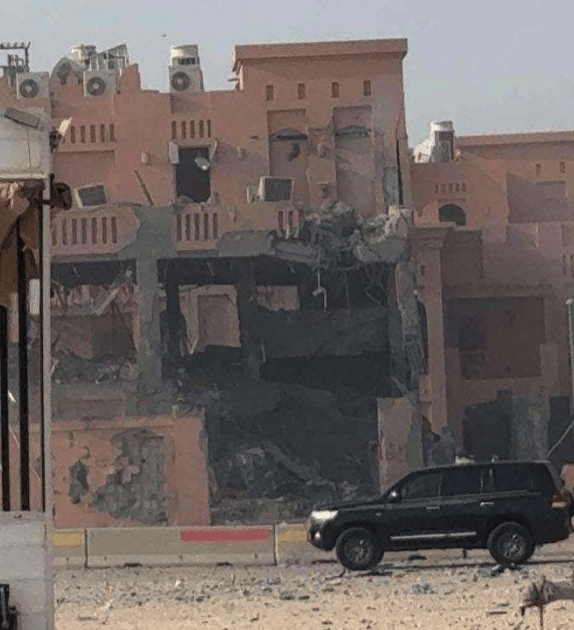
Will Israel strike 2 countries in 2026?
Polymarket
Impact
9/10
Volatility
high
Macro
high
Risk
medium
Will Israel strike 12 countries in 2026?
Polymarket
Vol: $52.3kLiq: $11.3k
Impact
4/10
Volatility
high
Macro
low
Risk
high
Will Israel strike 11 countries in 2026?
Polymarket
Vol: $73.0kLiq: $10.1k
Impact
3/10
Volatility
high
Macro
high
Risk
high
Will Israel strike 1 country in 2026?
Polymarket
Vol: $87.3k
Impact
10/10
Volatility
high
Macro
high
Risk
medium
Will Israel strike 15 or more countries in 2026?
Polymarket
Vol: $26.9kLiq: $11.8k
Impact
4/10
Volatility
high
Macro
high
Risk
high